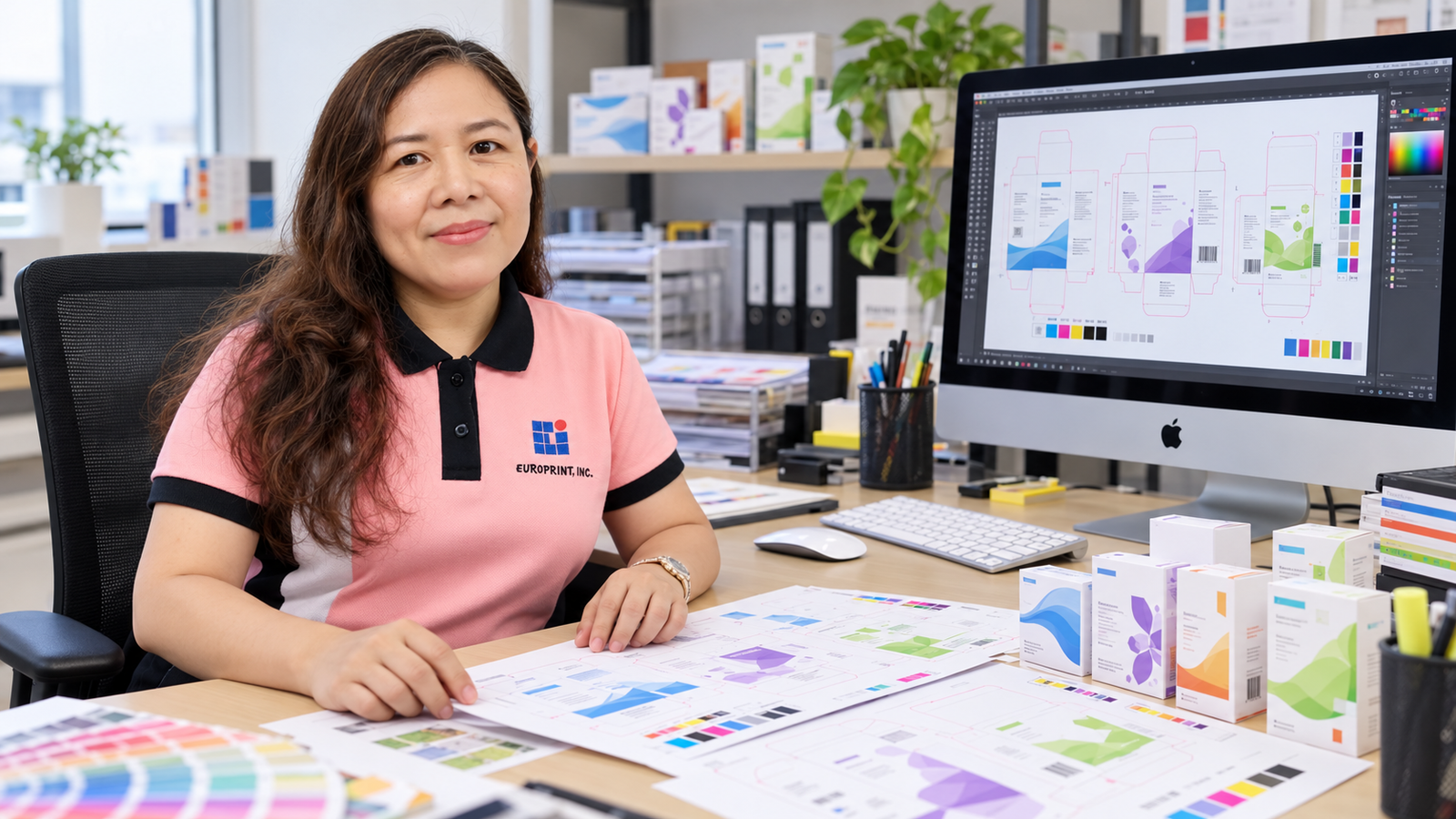
Edith S. Horca
Pre-Press Supervisor
Europrint, Inc
Pharmaceutical Printing & Packaging
“As Pre-Press Supervisor at Europrint, Inc., a pharmaceutical printing and packaging company, I supervise the preparation of medicine artworks, where color accuracy is critical. Through the Fundamentals of Color & Printing training, I gained a clearer understanding of paper whiteness and its tolerances—particularly the differences between inkjet proofing paper and the paper used on the offset press. I also learned how press dot gain and appropriate compensation in prepress can help support the press team in achieving the intended result.
The training helped me understand the importance of selecting the appropriate printing condition, such as FOGRA39, and aligning Lab* measurements, measurement conditions, and gray balance. These factors work together; each is essential to achieving consistent color.
Equally valuable were the lessons on communicating with colleagues: using common terms, checking our shared understanding, and exploring neural entrainment and adaptive leadership. These helped me appreciate how technical knowledge and effective communication support one another.
The training strengthened my understanding of both the color process and my role in helping our teams work together.”

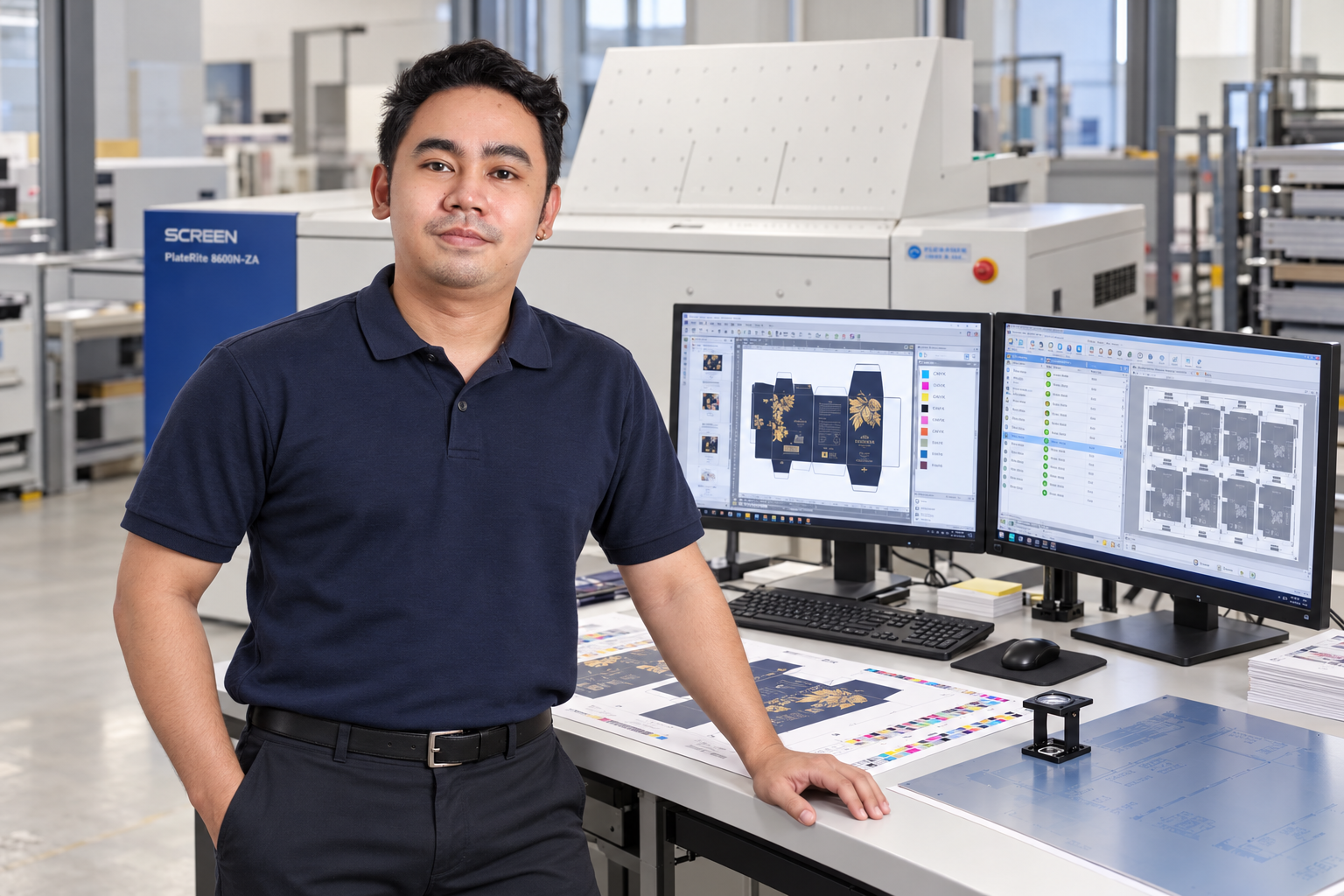
Andrian Avila
Pre-Press Specialist
Pioneer Team
Speedjobs Printing Services
“CTP training helped me connect file preparation with the requirements of the offset press.”
I graduated in Graphic Arts and Printing Technology from the Technological University of the Philippines and became one of the pioneers of Speedjobs Printing Services.
My training involved a Harlequin-based RIP, a SCREEN PTR-8600MII imager, and a Grafmac plate processor. I was guided step by step through the RIP settings—from screening and color separation to resolution, screen ruling, and linearization. I learned to check the dots on the plate and understand how the settings affected the output.
Operating the imager initially seemed straightforward: load the plate and wait for it to come out. But the training taught me that producing a reliable printing plate requires attention to the entire process.
On the processor, I learned the importance of developer bath temperature, processing speed, development time, and proper gumming. I learned to recognize signs of incomplete development, including residual coating that could contribute to unwanted ink pickup and marks on the printed sheet. Plate quality and run length became responsibilities I had to understand and monitor.
As my training progressed, I was introduced to file preparation. I learned that PDF files come in different formats, and that we must understand which formats our RIP can process correctly. This also taught me the importance of communicating clear file requirements to the graphic artist.
CTP training helped me understand both sides of production: what the offset press needs and how those requirements connect to file preparation, RIP settings, and plate processing.
Today, I work as a prepress specialist, building on the foundation I gained at Speedjobs. I thank God for the opportunity, the guidance I received, and the blessing of growing in this profession.
Mark Jeffrey Lontac
Pre-Press Head
Pioneer Team
Speedjobs Printing Services
“I learned to see how prepress decisions affect the printing process.”
Before joining Speedjobs Printing Services, I worked as a graphic artist in visual arts and large format printing. Learning CTP production helped me understand the responsibility behind preparing a plate for the press. I learned how developer temperature, processor speed, and development time work together—and why oxidation and proper gumming matter. Incorrect settings can lead to underdevelopment or overdevelopment. Overdevelopment can reduce plate life, so I learned to keep processing conditions within the tolerances specified in the manufacturer’s technical data sheet.
During a one-day observation at Jams Printing, I saw how printing plates are used on an offset press, including plate packing and fountain solution control. That experience helped me connect our prepress work with what happens on the press and make better-informed decisions during preflight.
Basic color management and leadership training broadened my understanding beyond artwork preparation. Today, as Prepress Head of Speedjobs Printing Services, I bring that learning into my responsibility for the team and the work we produce.
Mark Jeffrey Lontac
Prepress Head
SPEEDJOBS Printing Services
John Ralph Salvador
Pre-Press Specialist
Pioneer Team
Speedjobs Printing Services
“I started by pressing ‘Print.’ Training helped me understand what happens next.”
During the COVID-19 pandemic, I worked as a delivery rider. I felt blessed to have the opportunity to train in operating a SCREEN CTP system with a Harlequin-based RIP.
At first, the instruction seemed simple: find the PDF file and press “Print.” Everything worked—until PDL errors appeared and the RIP stopped rasterizing. I needed to understand why the file could not be processed and how to address the problem.
Through training with Ferdinand “Billy” Basilio, I learned how the RIP works and how file preparation affects its ability to process a job. I learned to review and re-save problem files with appropriate settings, and how preflighting can help identify issues before they reach the RIP.
I also learned the differences between native PDF files and PDF/X formats, including PDF/X-1a, PDF/X-3, and PDF/X-4. Choosing the right format means understanding what our RIP version and configuration can correctly process.
The training also taught me to pay attention to plate storage and the production environment, including room humidity and prolonged exposure of plates to humid conditions. Proper handling matters in protecting plate performance and achieving the expected run length.
From delivering jobs, I gained the opportunity to help produce them—with a better understanding of the files, the system, and the care the plates requires
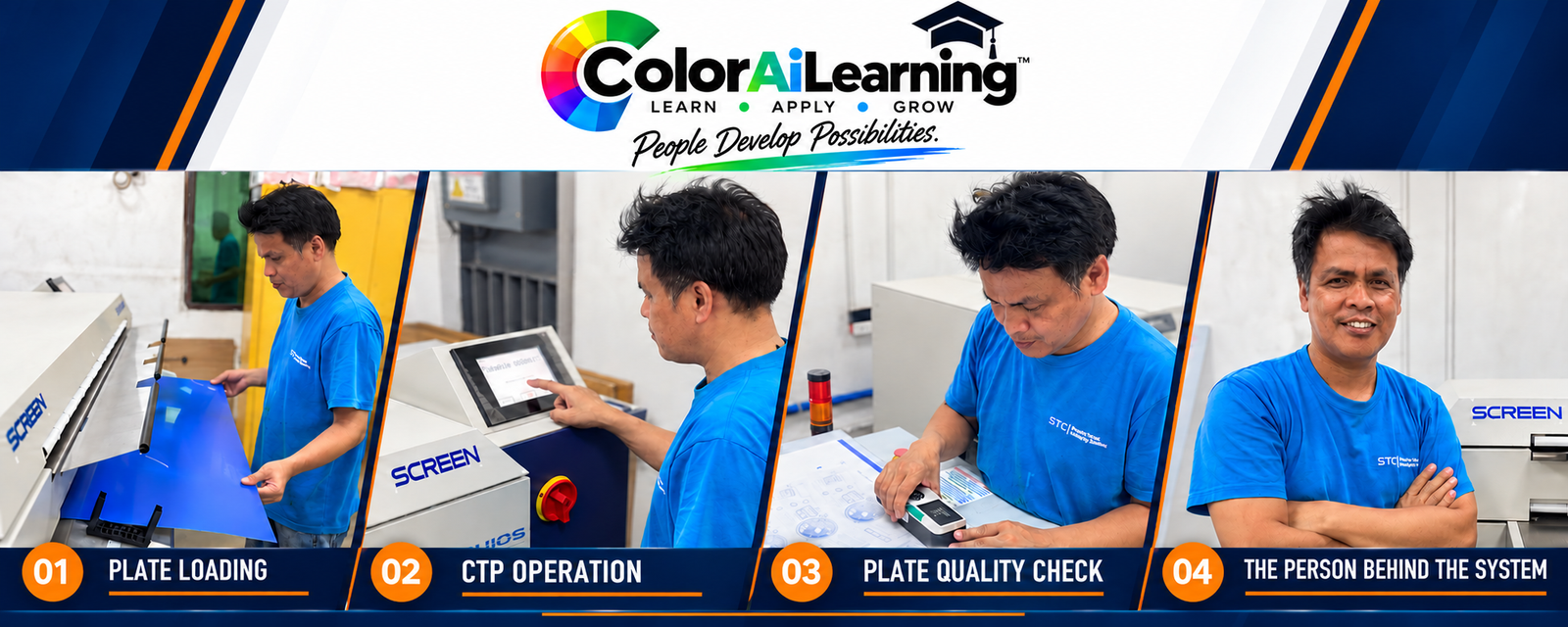
“This training gave me new skills, greater confidence, and my first training certificate.”
First of all, I thank God for giving me the opportunity to attend the SCREEN CTP training.
Through this training, I gained new knowledge and practical skills that helped me better understand my responsibilities as a CTP operator. I became more confident in operating the equipment and more aware of the care and attention my work requires.
I am grateful to our trainers for their patience, guidance, and willingness to share their knowledge. Their support helped me understand the purpose behind the tasks I perform.
For the first time, I received a certificate of training. This is a meaningful milestone in my life—a reminder that I can continue learning, develop my skills, and grow in my work.
I know I still have much to learn. I will continue to do my best, work diligently, and apply what I have learned with care and responsibility.
Thank you, and to God be all the glory!
Jenmar I. Estrada
SCREEN CTP Operator
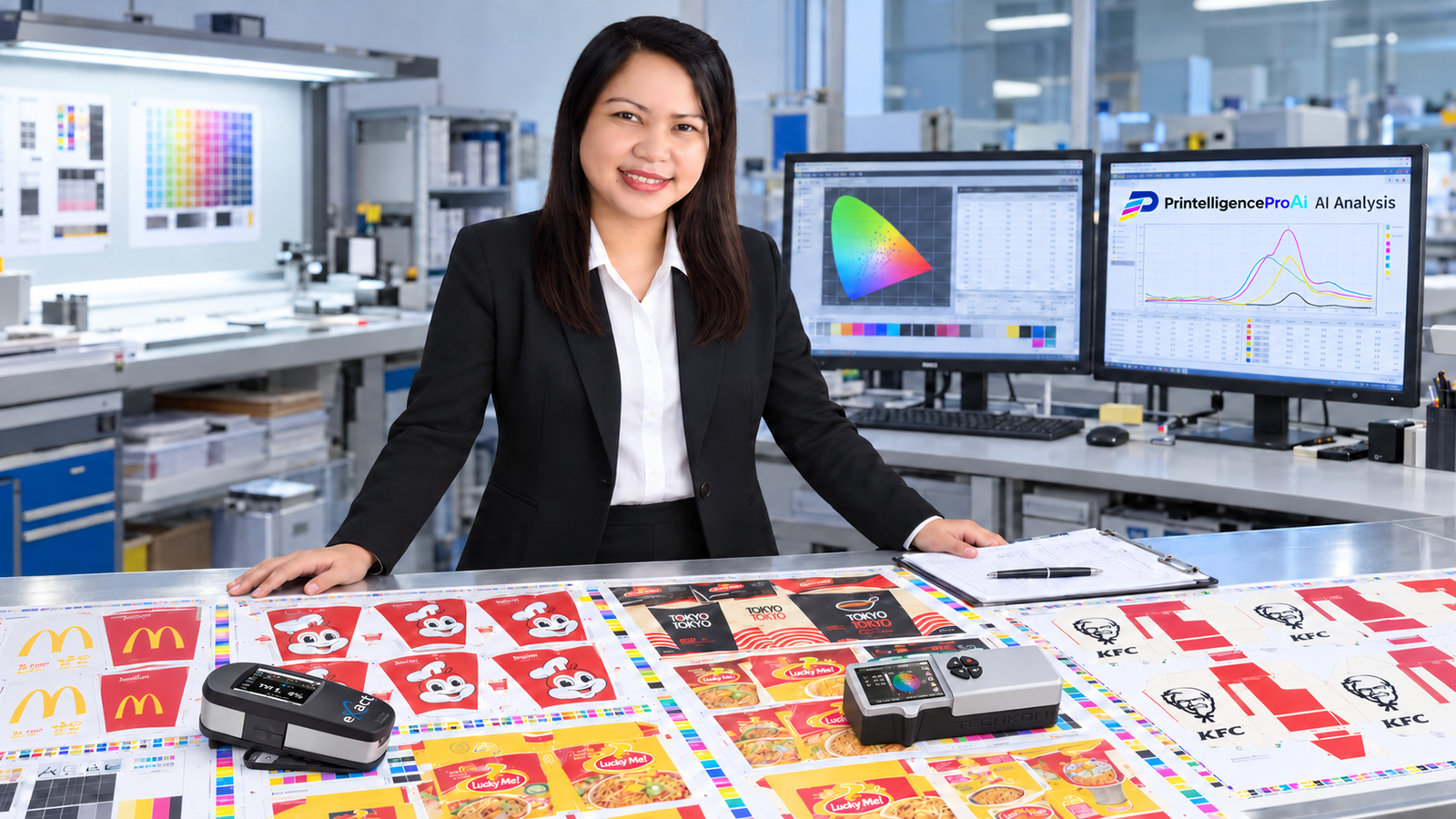
Michelle Dela Cruz
Quality Assurance / Quality Control
Assistant Supervisor
Styrotech Corporation
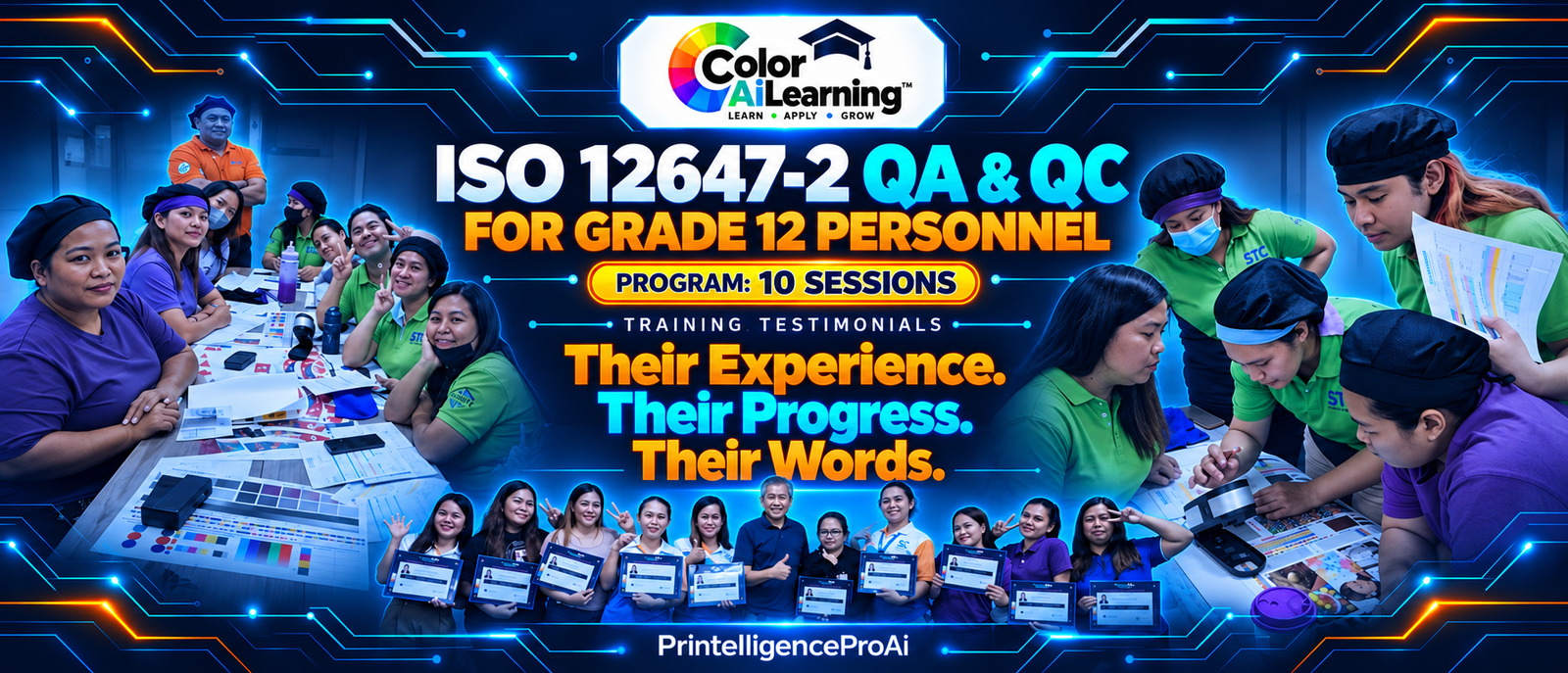
“This training gave our QA team valuable skills, greater confidence, and a stronger commitment to excellence.”
First and foremost, we thank Almighty God for the opportunity, wisdom, and strength to attend and successfully complete this intensive QA training. Together with my dedicated QA team, I gained deeper technical knowledge and practical skills that strengthened our understanding of our responsibilities in quality assurance. The program helped us perform inspections with greater precision, uphold company standards with more confidence, and recognize the care, accuracy, and discipline our work requires every day.
On behalf of our entire QA team, I extend our heartfelt gratitude to our mentor, Sir Ferdinand “Billy” Basilio, for his patience, guidance, and dedication to sharing his expertise. He helped us understand the purpose behind every quality check: each inspection contributes directly to the quality of the finished product.
Our training certificates represent more than a personal milestone. They mark a shared achievement—and a responsibility to apply what we have learned, continually improve, and uphold quality in our daily operations.
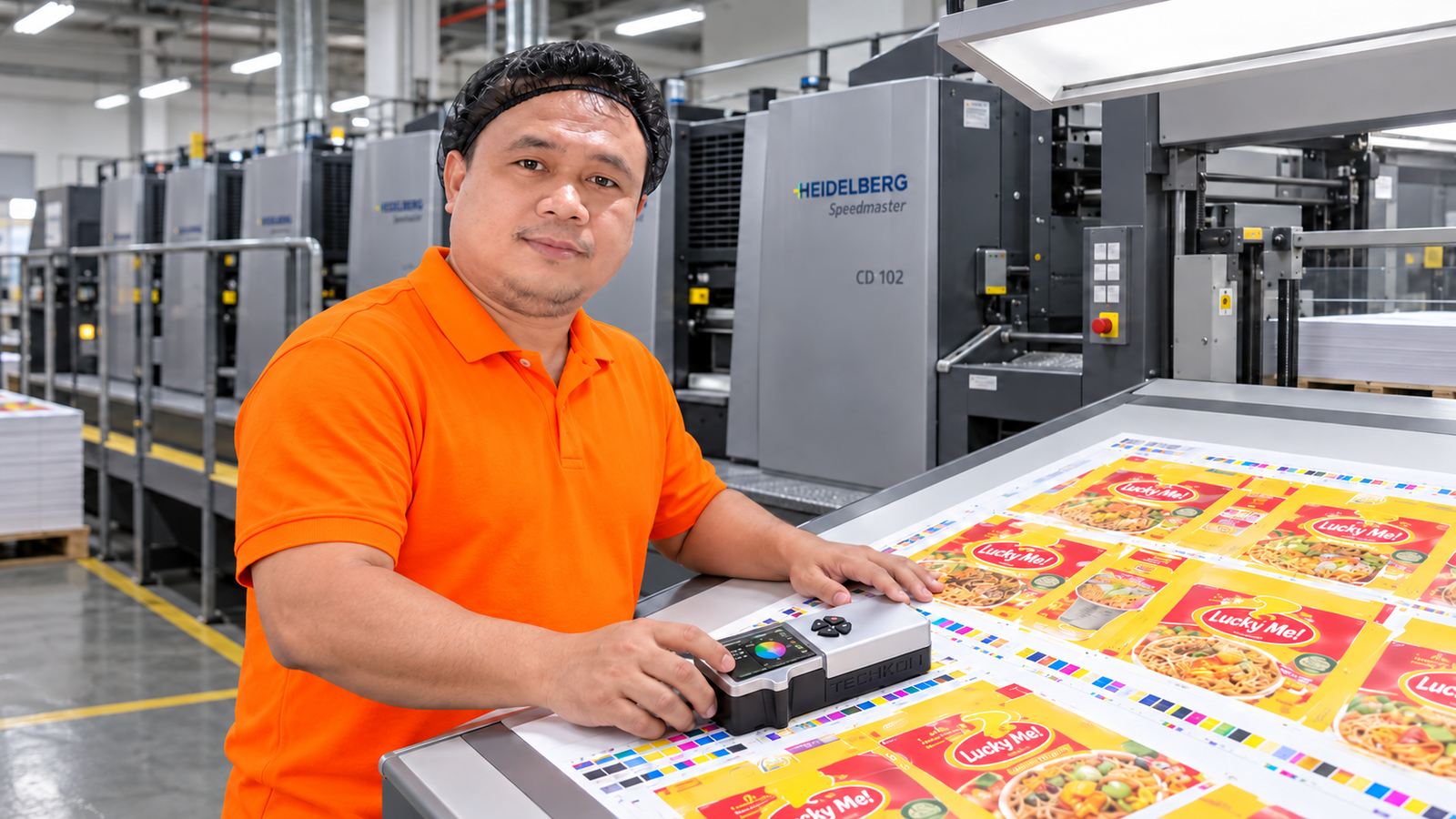
Rodrigo Toquero
Production Department
Press Supervisor
Styrotech Corporation
“At first, I was unsure what to expect from the 10-session training. But when I reviewed the training structure and the topics for each session, I could see how the program would address our production concerns.
The approach introduced me to Conceptual Clarity—a new concept for me—with two clear goals: build competence and develop ownership.
After every session, our QA trainees brought something new into production and applied what they had learned. As their understanding and confidence grew, our printing approval time became shorter.
By the end of the program, we observed approximately a 30% reduction in printing approval time, helping us move production faster and reduce spoilage.
The team learned to express print quality through measurable data while using visual inspection to assess printing defects. We are now applying ISO 12647-2 principles in our quality control process, with PrintelligenceProAi AI Analysis planned for implementation.
For me, the value of this training is seeing people understand their work, apply their knowledge, and take responsibility for quality.”
“By the end of the 10-session program, we observed approximately a 30% reduction in printing approval time. Our QA team became more competent, applied measurable quality checks, and took greater ownership of their work.”
Rodrigo Tuquero